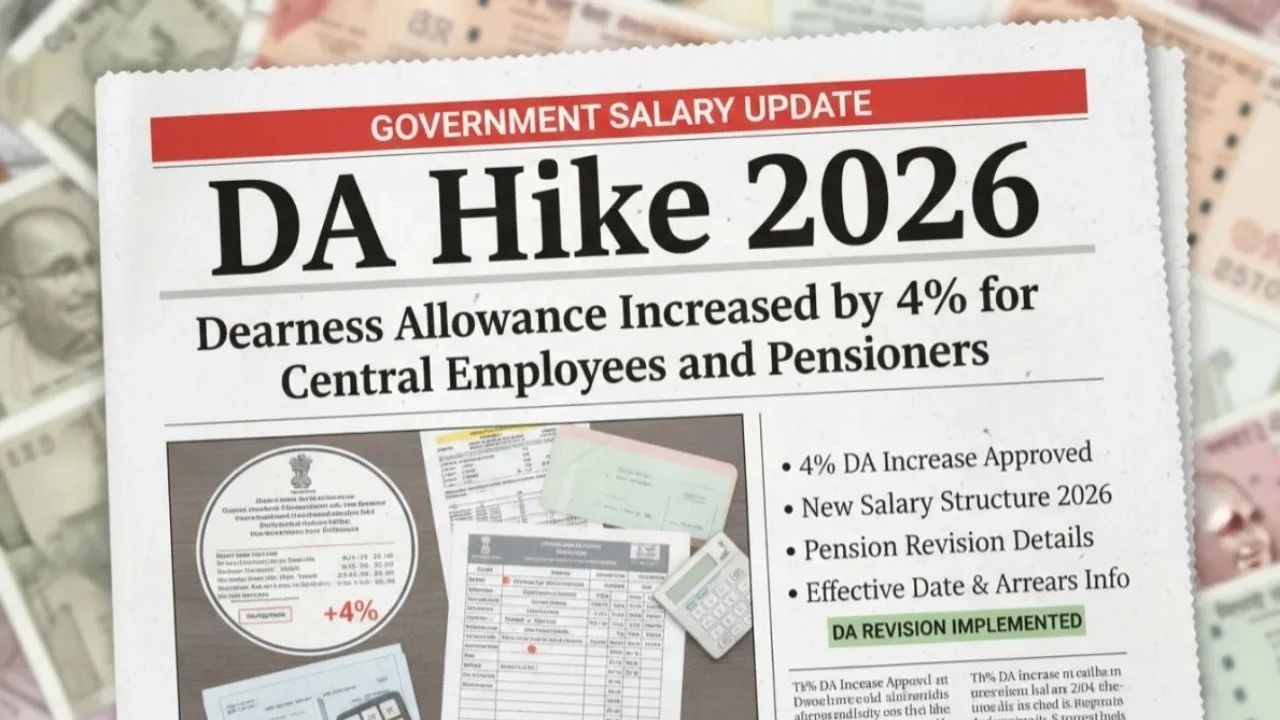
The Central Government has approved a 4% increase in Dearness Allowance (DA) for government employees and Dearness Relief (DR) for pensioners in 2026. This decision provides financial support to millions of households that depend on government salaries and pensions. With the rising cost of living affecting everyday expenses such as food, fuel, education, and healthcare, the increase aims to help families manage inflation more effectively. Even though the percentage increase may seem small, the financial impact becomes meaningful when applied to individual salary structures.
Understanding the Purpose of Dearness Allowance
Dearness Allowance is an important component of a government employee’s salary. It is designed to help employees cope with rising prices of essential goods and services. Similarly, Dearness Relief is provided to pensioners so that their pension income remains aligned with inflation. With the new revision, the total DA rate increases to 60% of basic pay. Since DA is calculated as a percentage of the basic salary, employees with higher basic pay will receive a higher amount in absolute terms.

How the 4% Increase Affects Monthly Income
The impact of the increase becomes clearer when calculated against actual salary figures. For instance, if a government employee has a basic salary of ₹50,000 per month, a 4% DA increase results in an additional ₹2,000 every month. Over the course of a year, this equals ₹24,000 in additional income. For many employees, this extra money can help cover regular expenses such as grocery bills, utility payments, school fees, or loan installments.
Benefits for Pensioners Through Dearness Relief

Pensioners also benefit from this revision through Dearness Relief. Since pension is calculated based on the last drawn salary, the relief is added to the basic pension amount. For example, if a pensioner receives ₹30,000 as basic pension, the 4% increase adds ₹1,200 to their monthly income. Over a year, this amounts to ₹14,400. For retired individuals, this additional income can help manage healthcare costs and other daily expenses.
How Inflation Determines DA Revisions
The adjustment in DA is based on the All-India Consumer Price Index for Industrial Workers, which tracks changes in the prices of essential items. When inflation rises, the index reflects this trend, and the government adjusts DA accordingly. This system ensures that employees and pensioners do not lose purchasing power as living costs increase.

Disclaimer: This article is provided for general informational purposes only. The details mentioned are based on publicly available updates regarding the Dearness Allowance increase. Actual percentages, implementation dates, and arrears payments may vary depending on official government notifications. Readers should verify information through official sources or consult financial professionals before making financial decisions.